Cold Storage & Refrigerated Building Insulation in Ontario
For coolers, packing barns, and refrigerated buildings, the envelope is the margin. Closed-cell foam holds setpoint and kills condensation.
In the middle of Canada's greenhouse capital, we know what cold storage means to an operation: it's where the crop's value is protected or lost. Every thermal bridge and air leak in a cooler is refrigeration load — compressors cycling harder, temperatures swinging, and product quality paying for it.
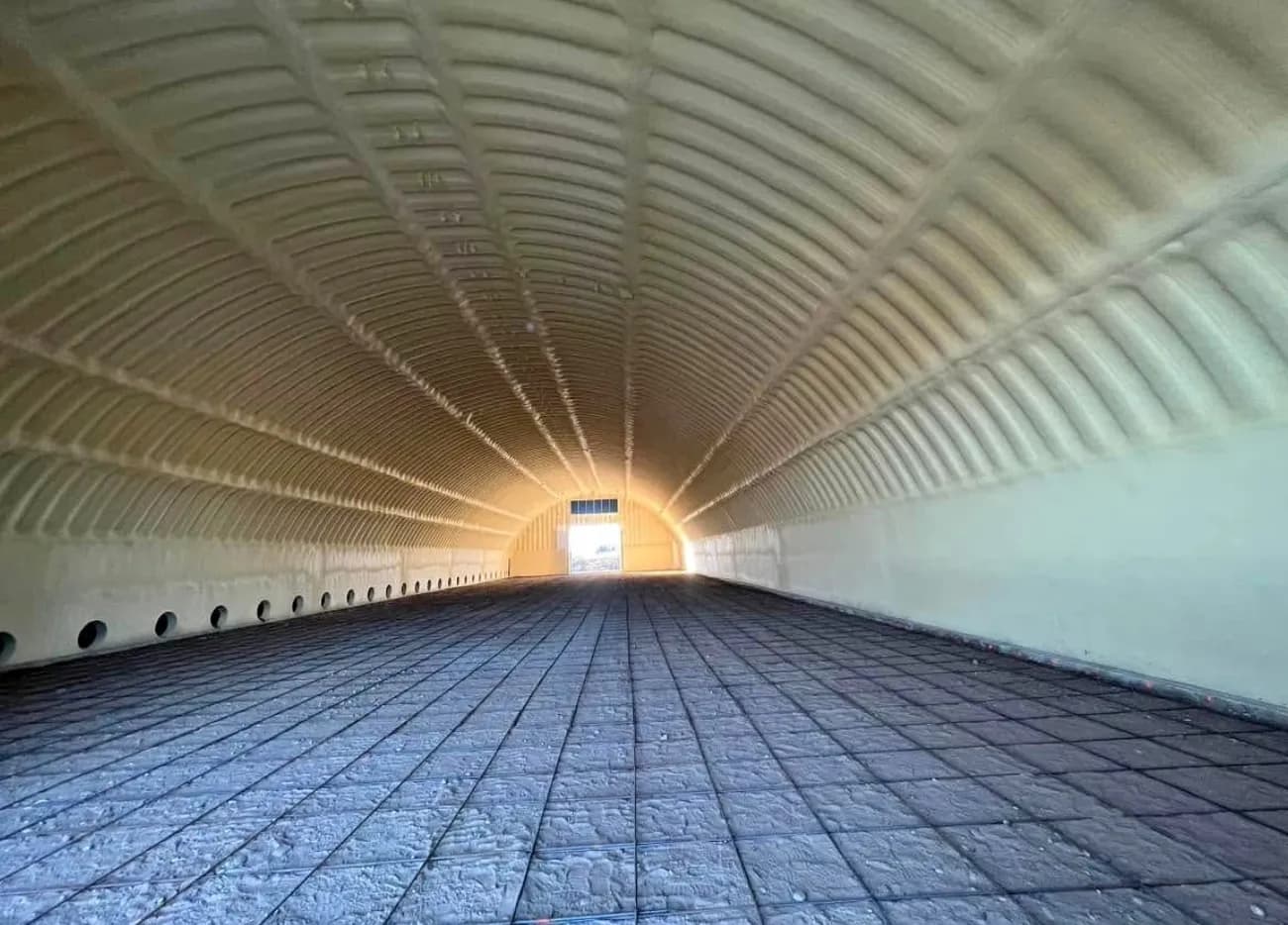
Closed-cell spray foam is the standard envelope for temperature-critical rooms because it solves the whole problem in one assembly: the highest R-value per inch where wall thickness is limited, a continuous air seal with no joints, and a vapour-impermeable surface that stops condensation and shrugs off washdown moisture.
We build new cold rooms and retrofit existing ones across Essex County — and mobilize anywhere in Ontario for large storage and processing facilities.
We mobilize anywhere in Ontario for projects at scale.
The Problem
Coolers Leak at the Transitions
Most existing cold rooms are panel systems, and panels are fine — until they meet structure. The transitions where panels meet block walls, ceilings, floors, and door frames are where air leaks in, ice builds, and compressors work overtime. Those details are exactly what sprayed foam seals.
Condensation is the second cost: cold surfaces adjacent to warm, humid packing areas sweat constantly, creating food-safety issues and corroding equipment.
Why It Works
Why Foam for Temperature-Critical Rooms
- Highest R-value per inch — critical where every inch of wall matters
- Seamless air seal — no joints, no gaskets, no infiltration load
- Vapour-impermeable — stops condensation and moisture migration
- Seals panel-to-structure transitions that panel systems can't
- Reduces compressor runtime and temperature swing
- Unaffected by washdown humidity
Where We Apply It
Where We Apply It
- Produce cold storage
- Greenhouse packing barns
- Cooler and freezer rooms
- Food processing areas
- Controlled-atmosphere storage
- Refrigerated warehouses
How It Works
Scheduled Around Your Season
Step 1: Walk the Building
We assess the envelope, transitions, and refrigeration behaviour.
Step 2: Scope
Assemblies, thickness, and phasing mapped to your harvest and packing calendar.
Step 3: Apply
Sprayed and detailed around racking, doors, and equipment.
Step 4: Verify
Thickness checks and documentation — setpoint performance you can measure.
FAQ
Common Questions
Usually, yes. Sealing transitions and adding foam to under-insulated surfaces transforms most existing rooms without touching the panel system. We'll tell you on the walk-through if a full envelope makes more sense.
Ready to get started?
Call (519) 324-6173