Greenhouse Hot Water Tank Insulation in Leamington & Essex County
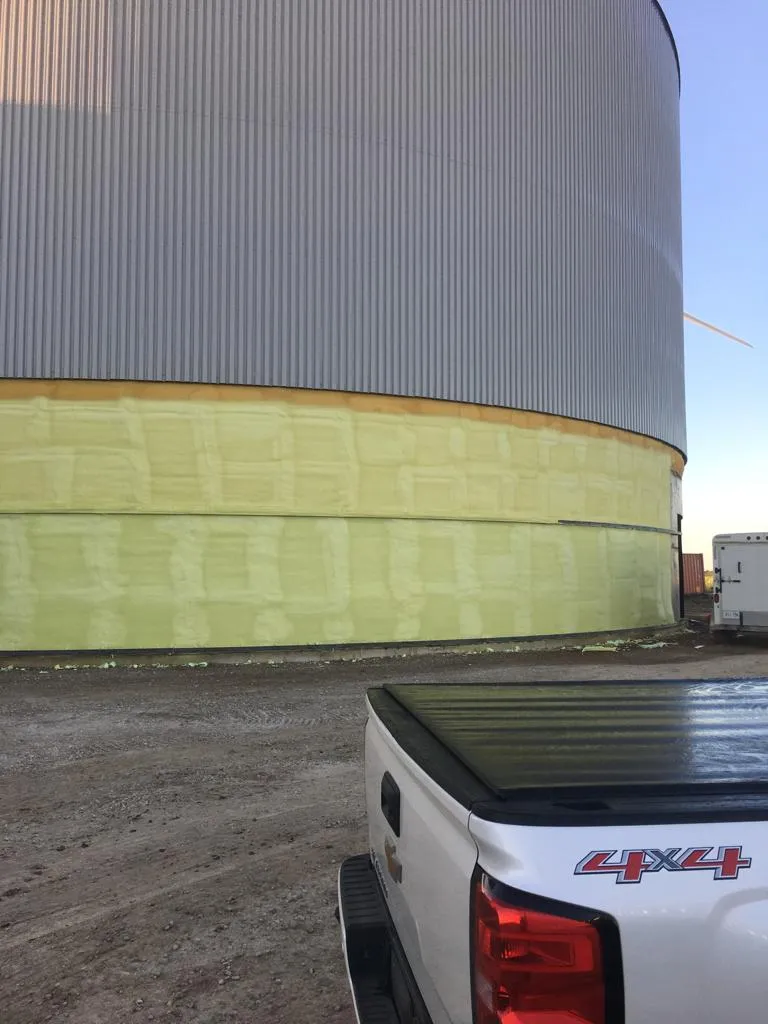
Exterior closed-cell spray foam for thermal storage tanks — 3 to 4 inches on the roof and walls, sprayed directly to the steel. Heat you paid to make, kept in the tank.
Every serious greenhouse operation in Essex County runs on stored heat: boilers and CHP units charge hot water tanks by day, and that water carries the crop through the night. The tank is the battery of the whole heating system — and a bare or poorly insulated steel tank bleeds the charge into the sky all night long.
We insulate these tanks the way they should be done: closed-cell spray foam applied directly to the exterior steel, typically 3 to 4 inches on the walls and roof. Sprayed foam wraps the tank in one seamless, fully bonded envelope — no board joints, no banding, no gaps at nozzles and manways — and a protective topcoat finishes it against UV and weather.
We've sprayed hot water tanks for greenhouse operations in our own backyard — Leamington is the greenhouse capital of Canada, and these tanks are a service we know from the ladder up. We mobilize anywhere in Ontario for greenhouse and thermal storage work.
We mobilize anywhere in Ontario for projects at scale.
The Problem
A Bare Tank Burns Money Every Night
Steel radiates heat aggressively, and a thermal storage tank holds its hottest water exactly when outdoor temperatures drop — overnight, when the greenhouse needs every degree. Standing losses from an under-insulated tank are boiler fuel spent twice: once to heat the water, again to replace what the tank gave away.
Conventional board-and-cladding insulation systems leave seams, compressed joints, and thermal bridges at every band and penetration — and once weather gets behind the cladding, wet insulation against warm steel becomes a corrosion problem hidden from view. Sprayed foam has no seams to fail and bonds directly to the steel, so there's nowhere for water to get behind it.
Why It Works
Why Sprayed Foam on Storage Tanks
- 3–4 inches of closed-cell (roughly R-18 to R-24) applied seamless over walls and roof
- Bonds directly to the steel — no cladding, banding, or joints to fail
- Self-flashes around nozzles, manways, ladders, and penetrations
- Dramatically reduced overnight standing losses — the water stays hot for the crop
- Stops exterior condensation and the corrosion that comes with it
- UV-protective topcoat finishes the system against sun and weather
Where We Apply It
Tanks and Vessels We Spray
- Greenhouse thermal storage tanks
- Boiler and CHP buffer tanks
- Hot water storage vessels
- Process water tanks
- Irrigation water tanks (frost protection)
How It Works
How a Tank Job Runs
Step 1: Assess
Tank dimensions, operating temperature, and surface condition. Quote back fast.
Step 2: Prep
Surface cleaned and prepped; piping, equipment, and surroundings masked and protected.
Step 3: Spray
Closed-cell applied in lifts to 3–4 inch spec across walls and roof, detailed at every penetration.
Step 4: Coat
Protective UV topcoat over the foam — finished, weathered-in, and documented.
FAQ
Common Questions
Usually, yes — exterior application doesn't require draining the tank. Very hot surface temperatures affect how foam is applied, so we confirm operating temperature during scoping and plan lifts accordingly. Many tank jobs happen in the shoulder season when the heating system is under lighter load.
Ready to get started?
Call (519) 324-6173